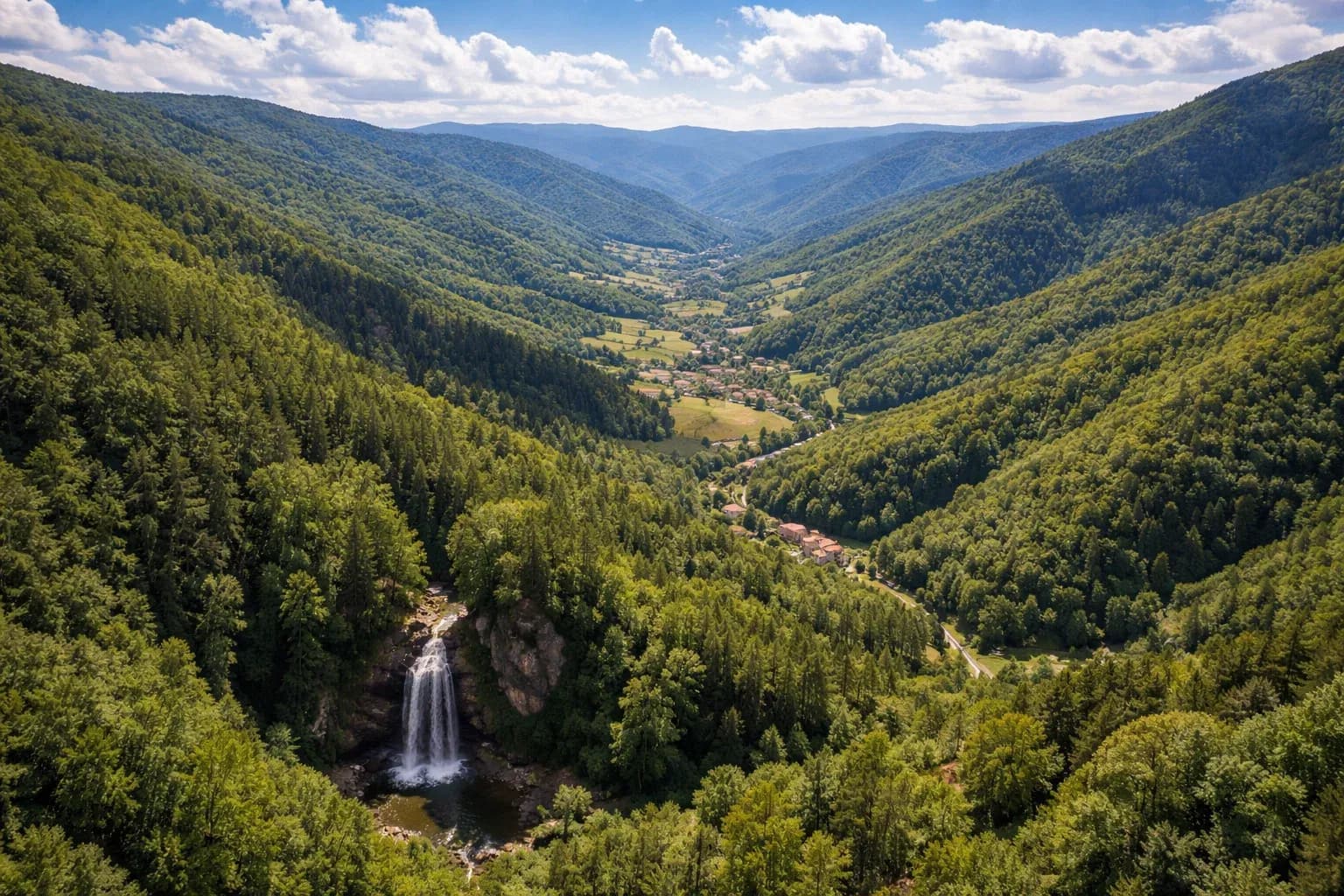
Centuries-old fir woods, trails up to Monte Falco, winter snowshoeing and historic inns: a guide to Campigna, the little village in the heart of the Foreste Casentinesi National Park.
Where Campigna is
Campigna is a small settlement set within the silver fir forest of the same name, in the heart of the Parco nazionale delle Foreste Casentinesi, Monte Falterona e Campigna. A useful note for anyone planning a trip: administratively it is a hamlet of the municipality of Santa Sofia, in the province of Forlì-Cesena, and therefore on the Romagna side of the Apennines. Pratovecchio Stia, in the Casentino, is instead the seat of the Park Authority. The sources we consulted give no distances or travel times from Pratovecchio Stia: before setting out, it is worth checking the route on a map.
A little history
Until the Unification of Italy, the forest of Campigna belonged to the Opera del Duomo in Florence, to which the Florentine Republic had assigned it in 1380. Its timber was used for the Duomo of Florence and for the ships of Pisa and Livorno. In 1838 the forest passed to the Royal Estates of the Grand Duchy and, in the nineteenth century, Grand Duke Leopold II had a hunting lodge built there. In 1914 it was acquired by the State Forestry Domain. Today the Campigna Nature Reserve, established in 1977, covers 1,375 hectares.
Nature: firs, beeches and woodland wildlife
The reserve is home to mixed woods of sessile oak, lime, maple, beech and silver fir; its most distinctive feature is the planted silver fir wood. Among the botanical rarities are tozzia alpina, here in its southernmost Italian station, and, in spring, the endemic orchid Epipactis flaminia. The wildlife includes red deer, roe deer, fallow deer, wild boar and wolf, while the birds include buzzard, goshawk, eagle owl and golden eagle.
Not far away lies the Sasso Fratino integral reserve, the first in Italy (1959) and, since 2017, part of the UNESCO site of ancient beech forests. The sources consulted do not explicitly link it to Campigna, and it should be remembered that access to the integral reserve is regulated: it is not a destination for free-range hiking.
What to do in Campigna
**Walking.** The Park offers a guided 13.5-kilometre loop, with 700 metres of ascent and an E difficulty rating, starting from the Tre Faggi at kilometre 30 of the SP 4 and crossing beech woods, perennial streams and the ancient fir woods of Campigna; it is not suitable for children. Shorter is the climb to the panoramic terrace of Monte Falco, the highest point in the Park at 1,658 metres: the «Tramonto sul Falco» excursion starts from Campigna, covers about 6 kilometres with some 200 metres of ascent and includes either a packed dinner or a meal in a local restaurant.
**Snowshoeing.** In winter the Park organises the «Bianca Campigna» snowshoe walk, through silent, bare forests: it lasts about three hours, is of medium difficulty and costs 12 euros for adults and 8 for children (conditions for the event organised by Quota 900, to be checked for the current season).
**Joining the festivals.** «Dal bosco al desco» is the festival that brings Campigna's main street to life, with food stalls, log-cutting, the two-man saw contest, little donkeys and the Santa Sofia band.
Where to sleep and eat
- **Albergo Lo Scoiattolo**, on via Campigna at 1,068 metres: it has been known since the early twentieth century as the inn where woodcutters and forest rangers would stop. Today it has 10 rooms, is open all year round and is flanked by a family-run restaurant serving Tuscan and Romagna dishes.
- **Rifugio Villaneta**: it can only be reached on foot along trail no. 243 from Campigna, about 15 minutes downhill. It has rooms with bunk beds, a lounge with a fireplace, a fully equipped kitchen and bathrooms with showers; heating is by wood stove only.
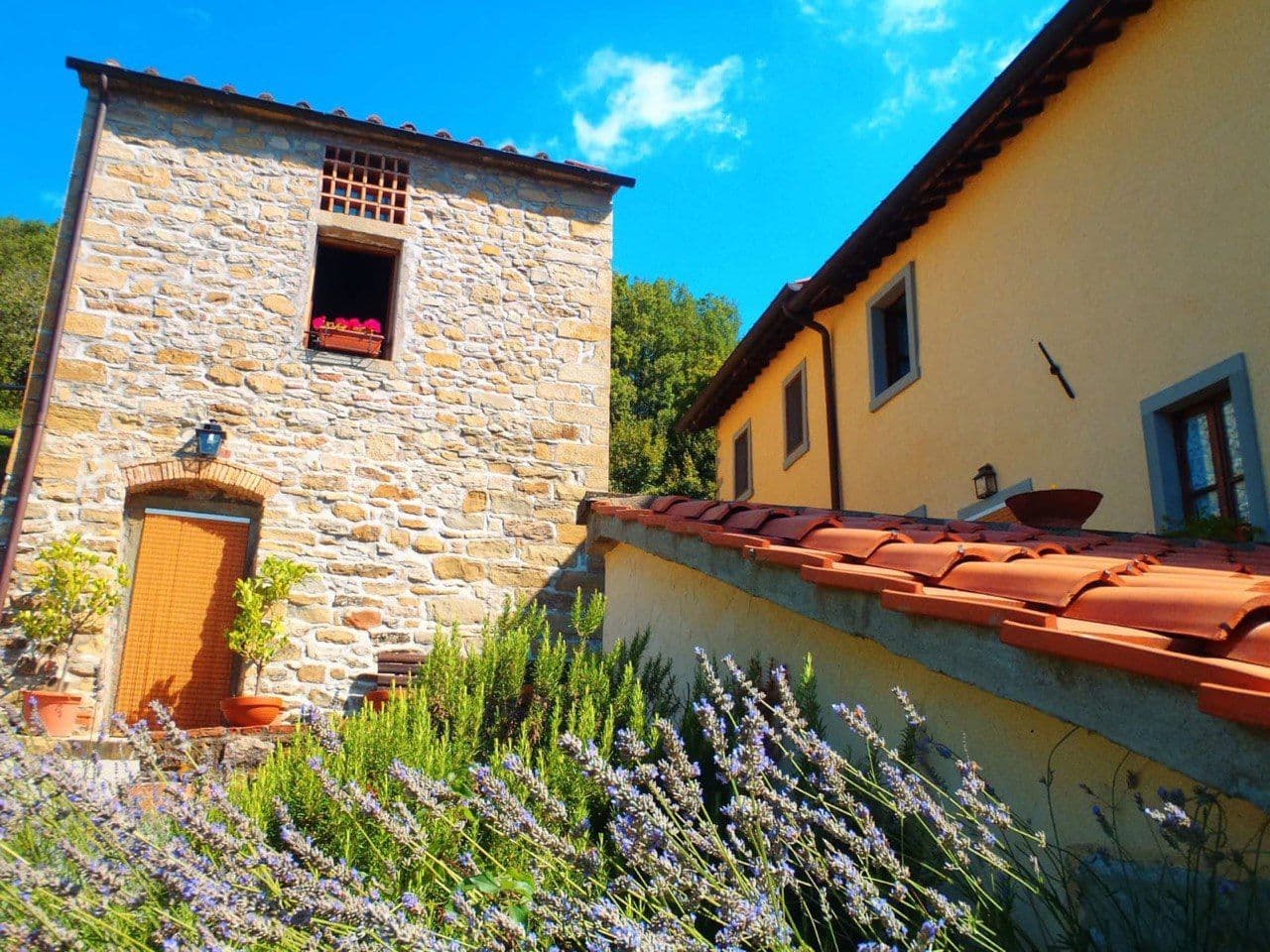
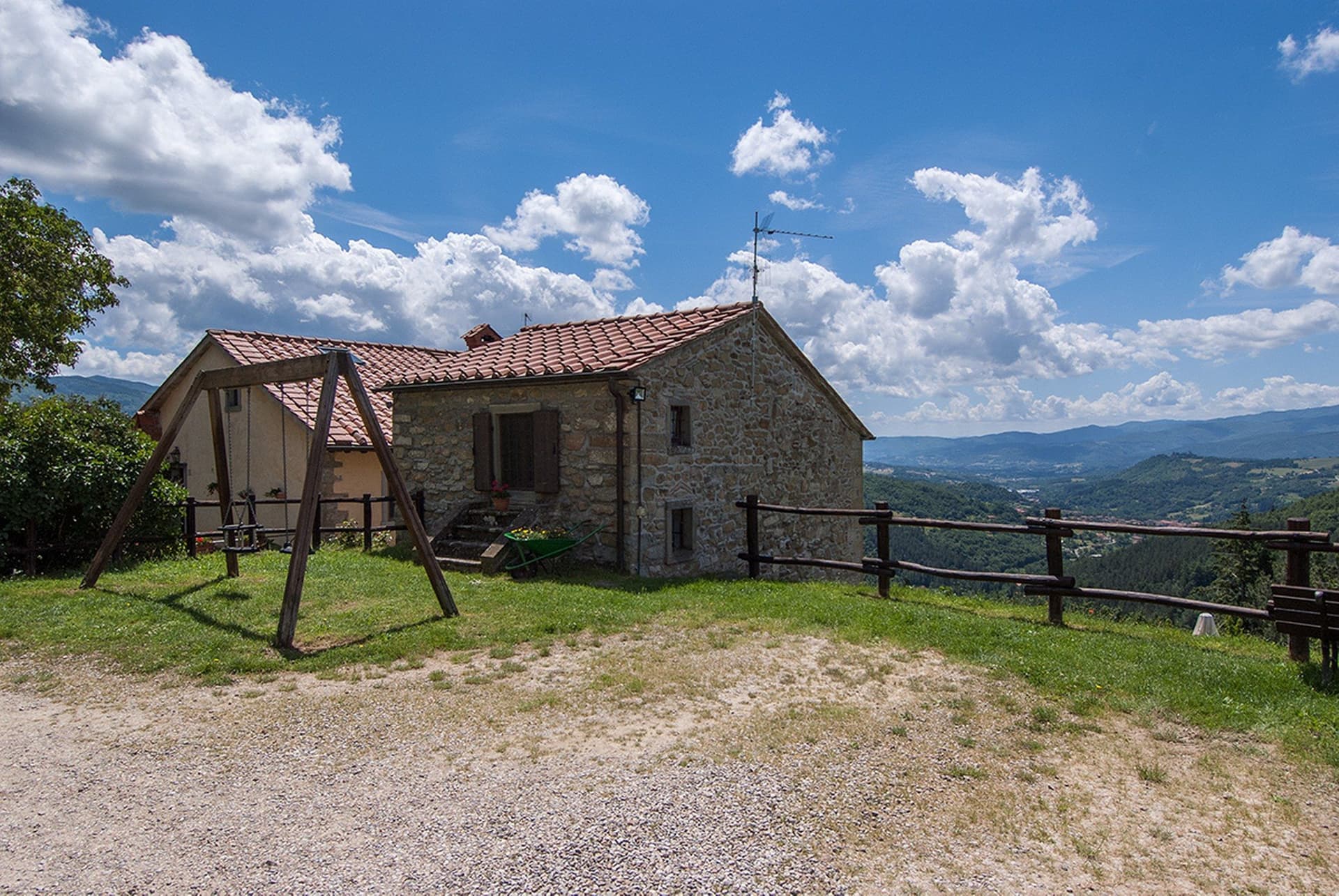
- **Agriturismo Il Poderone**: an old farmhouse, restored, with organic produce from the vegetable garden and the henhouse, which also features as a stop on several excursions.
Opening hours and rates change from one season to the next: it is best to contact the properties directly.
In brief
Campigna is a destination for those seeking silence, woods and trails, rather than a resort with facilities: for this reason it works beautifully as a day trip from a stay in the Casentino, or as a two-day stage along the Park's network of paths.
<!-- sources: https://it.wikipedia.org/wiki/Campigna, https://it.wikipedia.org/wiki/Parco_nazionale_delle_Foreste_Casentinesi,_Monte_Falterona_e_Campigna, https://it.wikipedia.org/wiki/Santa_Sofia_(comune_italiano), https://www.parcoforestecasentinesi.it/it/news/escursione-la-foresta-di-campigna, https://www.parcoforestecasentinesi.it/it/event/tramonto-sul-falco-1, https://www.parcoforestecasentinesi.it/it/event/ciaspolata-%E2%80%9Cbianca-campigna%E2%80%9D, https://www.parcoforestecasentinesi.it/it/event/dal-bosco-al-desco-1, https://www.parcoforestecasentinesi.it/it/news/il-falterona-e-la-foresta-di-campigna, https://trekking.parcoforestecasentinesi.it/en/poi/lo-scoiattolo-hotel-en/, https://trekking.parcoforestecasentinesi.it/en/poi/rifugio-villaneta/ -->
<!-- sources: https://it.wikipedia.org/wiki/Campigna, https://it.wikipedia.org/wiki/Parco_nazionale_delle_Foreste_Casentinesi,_Monte_Falterona_e_Campigna, https://it.wikipedia.org/wiki/Santa_Sofia_(comune_italiano), https://www.parcoforestecasentinesi.it/it/news/escursione-la-foresta-di-campigna, https://www.parcoforestecasentinesi.it/it/event/tramonto-sul-falco-1, https://www.parcoforestecasentinesi.it/it/event/ciaspolata-%E2%80%9Cbianca-campigna%E2%80%9D, https://www.parcoforestecasentinesi.it/it/event/dal-bosco-al-desco-1, https://www.parcoforestecasentinesi.it/it/news/il-falterona-e-la-foresta-di-campigna, https://trekking.parcoforestecasentinesi.it/en/poi/lo-scoiattolo-hotel-en/, https://trekking.parcoforestecasentinesi.it/en/poi/rifugio-villaneta/ -->